While I started this blog with the hopes of finishing the game, a few things came up that have, sadly, stalled it. One of them does have a bit to do with Persona and a point that comes up in regards to two of the characters, but it runs into spoiler territory. So, spoilers and personal stuff will be under the photo, and under the cut.
Showing posts with label tv world. Show all posts
Sunday, April 17, 2016
Tuesday, December 8, 2015
"Locked up in your Mind" - The Media and False Perceptions
As Kanji becomes part of the group, he manages to "get" a list from a student, and there are hints that the Midnight Channel rumor has turned into something that people tune in for, in the hopes of seeing the action. If they see the fights against the others or if they simply see the Shadow version of the ones thrown in before the fog lifts is unclear, though, as thus far the Protagonist and Investigation Team have managed to save everyone after the first two victims who are thrown into the TVs. As Yosuke said when discussing Saki Konishi's death, he saw her 'in pain' on the Midnight Channel the night before her body was found. If this is what happens when the victims end up remaining until the fog lifts, that means failure would result in basically a snuff film on midnight television, with everyone watching as the Shadows destroyed the 'host' of the series.
This seems to show a changing view of the Midnight Channel and how it operates. As more and more people watch the 'rumored' show, the more it becomes focused on the ones who are on television, and that results in them becoming the ones on the upcoming 'show'. With little known about the Show or it's effects, we can only figure things out from what we see, as well as the new information we get after the arrival of idol Risette.
The Midnight Channel: Analysis and Speculation Thus Far
The Midnight Channel appears to be something that exists no matter what the Protagonists or others do, as it is a link to the "Shadow" filled world inhabited by Teddie and the other Shadows. As Teddie explains, Shadows are born from Humans and sometimes will gain a great deal of power if they are repressed, ignored, or denied for a long time. Many of the Shadows that lurk in various areas are similar to each other, with the special Shadows and Minions falling into a specific stereotype that works in the setting given - Yukiko's Avenging Knight who 'tests' the 'princes' coming for Yukiko, Kanji's 'Fighting Gigas' who offers up a bouncer-like persona for those who are trying to gain Kanji's 'affections', and the two larger monsters, based on others, that later take up living in the highest level where the Shadows had once been.
- Shadows as the Repressed Selves/Jungian Archetypes
- Each Shadow is created and shows off what one of the characters wants/desires out of their lives or their current situations.They all speak or focus on the extreme of a harsh truth that the character sees or attempts to hide about themselves.
- Mayumi Yamano - Hatred of Other, Desire to Destroy Other
- Saki Konishi - Hatred of Perceptions, Dislike of Gossip, Dislike of Position
- Without anyone to save them or help them face their other self, both Yamano and Konishi were destroyed by their Shadow self and the Shadows in the area. However, as neither Shadow is encountered in that area, it is possible Shadows are linked to their Host, and thus died with the death of their original self
- Yosuke - Hatred of Loneliness, Unwanted Desire for Thrills vs. Heroic Actions, Misuse of Powers (Magician Reversed)
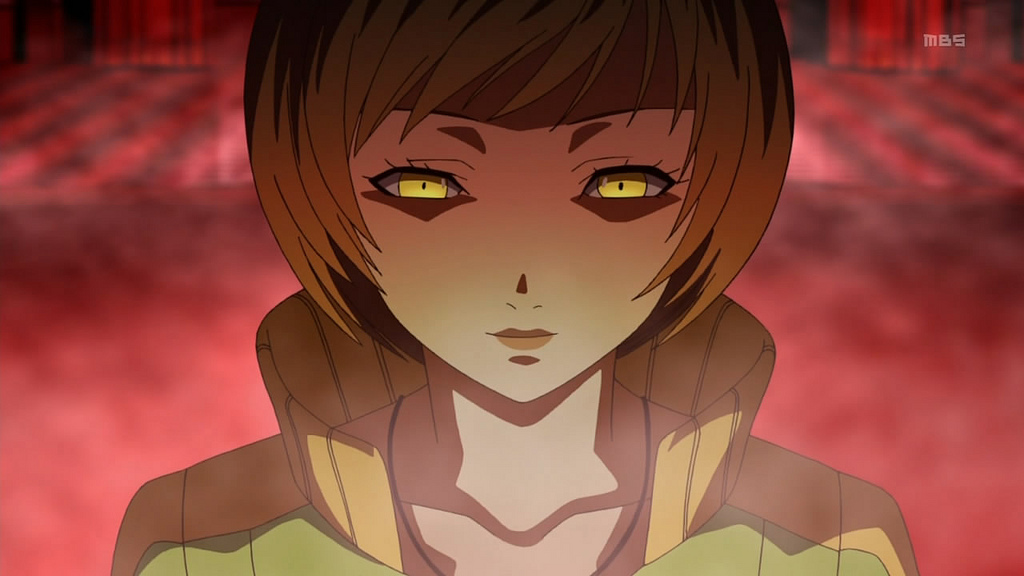
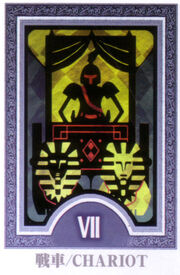
- Chie - Hatred of Self, Desire to Be Someone Else/Change Self, Desire for Control over Other (Chariot Reversed)
- Yukiko - Hatred of Obligations, Inability to Ask for Help, Inability to See/Use Power (High Priestess Reversed)
- Kanji - Hatred of Perceived Self, Self-Loathing/Self-Stereotyping, Misunderstanding of Self (Emperor Reversed)
- The Midnight Channel as a Conduit for Media
- With more and more attention brought to the Midnight Channel, there gradually creates a pattern and method to what occurs before/during someone's time in the other world and with the creation of their Shadow's "dungeon"
- It is unknown if the Midnight Channel shows the events in the dungeon, but it does show the beginning of the dungeon
- Grainy Video of Victim - Often the first one or two images shown during the rainy night are hard to tell, though there can be some hints of who the intended victim are. The first image often puts someone to mind, though they are not always sure. The second one usually cements the idea of it being one person in particular.
- The "Show" - After the victim is kidnapped and put into the TV, a show appears on the Midnight Channel
- Originally, the show seemed to have been of just the victim in the setting, though neither is witnessed by the Protagonist. Yosuke, who witnessed the final 'show' before Saki Konishi's death, only states that Konishi appeared to be 'in pain'.
- After the initial two deaths, the shows change when Yukiko is put in, so that she and Kanji appear in a type of television show
- Princess Yukiko's Search for Her Prince Charming
- Similar ideas to "The Bachelor/The Bachelorette" or a dating series, where someone is trying to find "love".
- MEN ONLY! Kanji Tatsumi in Rosy Steam Paradise
- A late night Skinamax production with a homosexual tone - though it's stated they are trying to find 'love', this is implied to be physical-only, not romantic.
- The rescue ends the show, and it's implied by two classmates that others can watch what happens, though how much they see, including if they see the rescue or acceptance of the Shadow, is not stated.
- The fact that the two seem to only know that it's a 'show' and as few/no one really talks about the two 'shows' or gossip isn't overheard, the first part might be all that's shown
- Conclusions: With more people watching the Midnight Show, the channel's focus has changed.
- The shows were never about soulmates, but others who were in the media predominantly due to interviews, scandals, or exclusives
- If the person appears in the 'other world', their Shadow may put on a 'show'
- This so far is only confirmed by those who appear on TV and then are put in the Midnight Channel after their appearance.
- Due to more people watching, as well as more being thrown in, the 'shows' are appearing with each main person tossed in
- The 'dungeon' can double as a trap for another person as well, especially if they are close to the person who was shown on the Midnight Channel or has heavy negative emotions towards themselves.
The Midnight Channel is changing, and it only gets weirder when Risette comes to town and a new change occurs.
Next Time: False Perceptions 2 - Celebrity and Media
Monday, August 31, 2015
More on the Persona (Elements, Folklore,and Transformation) - Take-Mikazuchi the Emperor
PERSONAS: The Dungeon
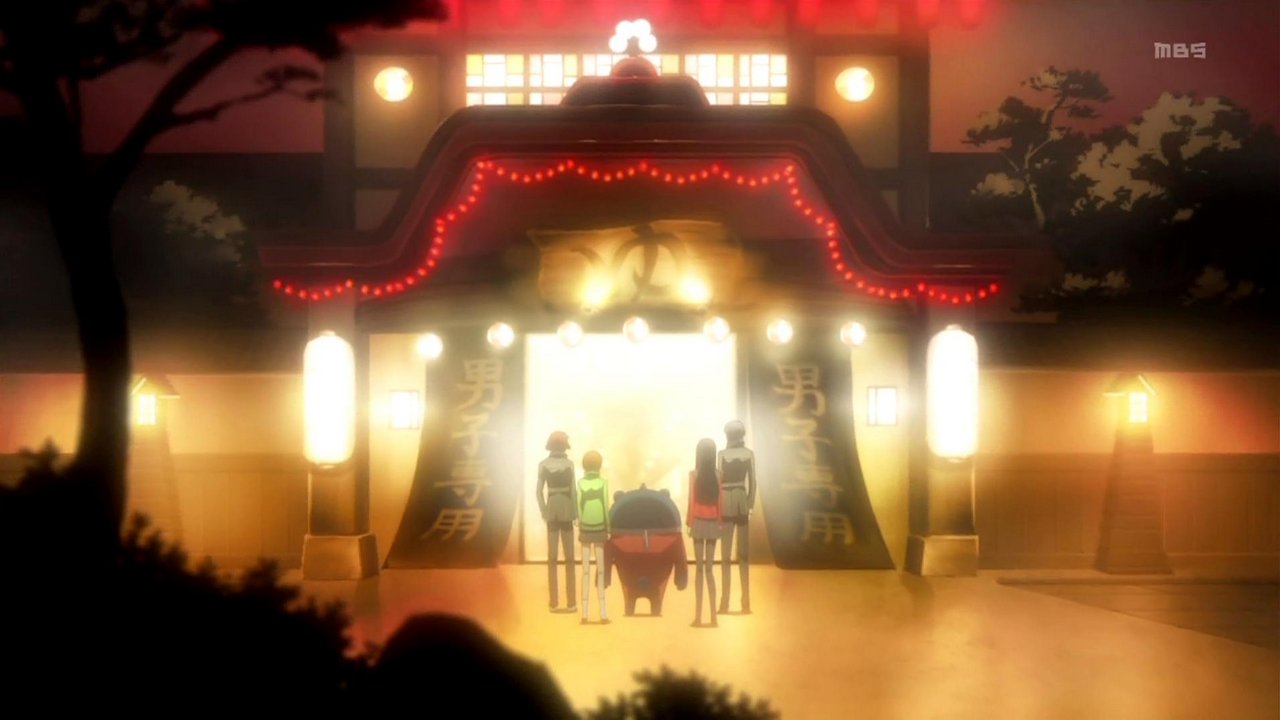
Like Yukiko's Castle, the Steamy Bathhouse serves more as a way to throw in the stereotype of what the outside world might believe or say that the other person wants, but instead of being based on complete rebellion against tradition while embracing an ideal, this is more going towards what society or others would think they wanted. If you don't like the opposite gender, then you're obviously homosexual. For Kanji, this translates into going somewhere that might accept him - a tough guy who does things for 'nice' reasons - and where he might find someone who shares in his interests but won't laugh at him for having those interests. In the case of Kanji, instead of looking for a 'prince' to take him away, he's searching for someone who will accept him, and this manifests as the idea that it must be a man (because of a bad experience or experiences with girls) and that it must be in a homosexual way. This is part of the reason why Kanji's actual sexuality is a bit harder to figure out - he might be gay, but it's more likely he's bisexual because of how he reacts to the girls, and because of his issues with that sexuality. It's often shown in media and through conversations about media's portrayal of bisexuals that being such is very hard - I often use the "Chasing Amy" analogy because it does have points where the female protagonist points out that she 'loves who she loves', but at the same time is ostracized when she begins to date a guy who she cares for after spending a lot of time exclusively dating women. Though the main issue with the story is to not be so emasculated by having a partner with more 'history' than you, another issue is with sexuality itself, and the problems that can come from trying to find yourself and letting others push you into a specific box.
The Steamy Bathhouse - Floor 10
Arriving at Floor 10 of the Bathhouse, after the Shadow begins to warm to the Protagonist as someone who will accept him, the group is confronted by Shadow Kanji, who serves only to enrage Kanji with his admissions of liking guys and why that is, not to mention his deeper seated fears of not being accepted by anyone. The Tough Guy and Nice Guy summoned by Shadow Kanji in his next form are ones that focus on boosting and aiding the Shadow, not to mention making it near-impossible to throw out the stronger attacks against everyone, forcing you to focus your attacks and status ailments on the Tough and Nice Guys before you can even work on damaging the very dangerous Shadow Kanji. Compared to Yukiko's battle, this one is far more stressful and dangerous, and harder to get through. While Yukiko might have held back a bit at first because her Shadow still trusted Chie and the others, Kanji has no such trust, and as such his power is quicker to display and his allies serve to only keep him from attacks, and thus from any attempts to defeat the rejected Shadow and allow Kanji the time to finally accept that part of himself.
The Emperor: Take-Mikazuchi
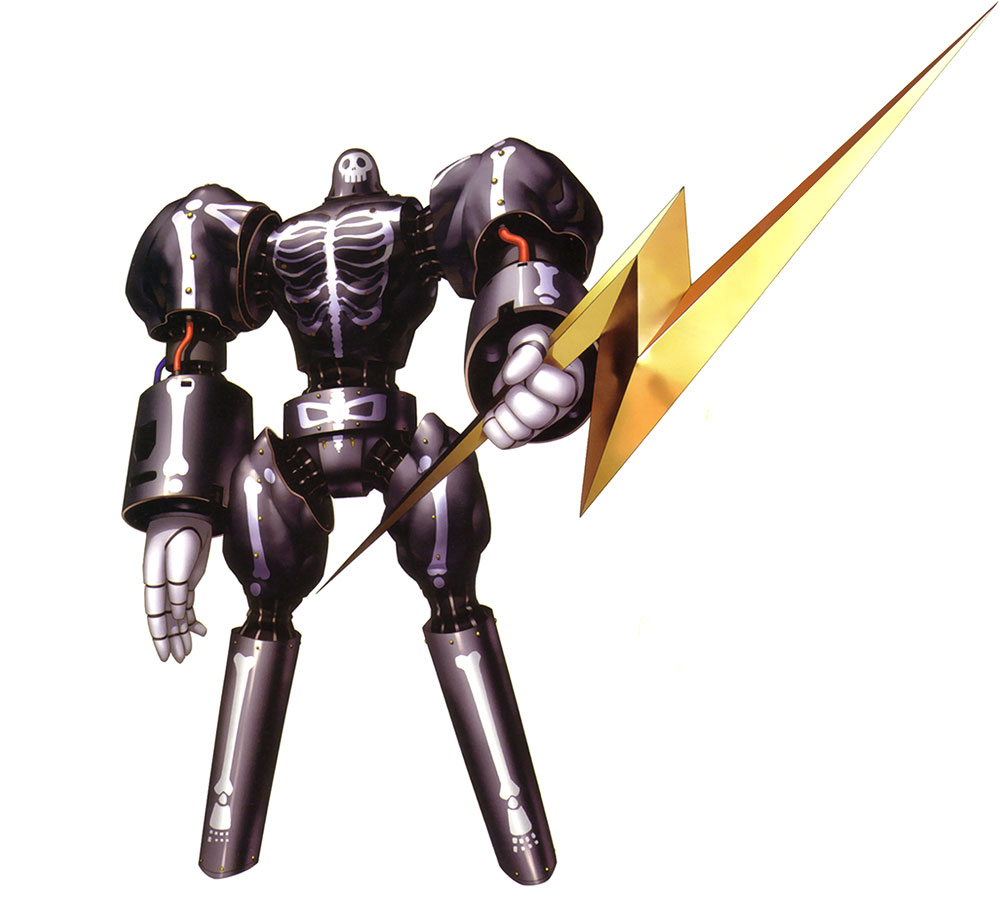
Going from the more human and hidden Shadow you fight, with dual color schemes to show his 'nice guy' and 'tough guy' personas that he shows off to the masses and the few, Kanji's Shadow is similar to Chie's in that they are both strong and protecting themselves from harsh truths, or trying to wrap themselves up in an identity that can sometimes appear ill-fitted. Where as Chie's Shadow attempted to look like Yukiko with it's long, black hair, and was more feminine in a dominate way, Kanji's Shadow wraps itself into a rose and masculine shell, hiding behind two strong, burly men who keep away or strengthen his views. In contrast, the Persona that Kanji gets after finally accepting himself is taller than most, with a skeleton outline on a burly, almost robotic body that is over-proportioned in some areas and smaller in others. He carries a lightning bolt, and is the main one outside of the Protagonist who uses Zio (Lightning) attacks on his opponents, not to mention his physical strength. In contrast, Take-Mikazuchi seems larger than the other Personas, and ready to battle anything and everything that gets in his way, if not through magic than by physical strength alone.
Named for a god created by Izanagi after he slew the fire-god Kagutsuchi, Take-Mikazuchi is one who descends to pacify the deities of Izumo on command of Amatsu, and engages one in the first sumo wrestling match, easily defeating him. He is considered a god of thunder and a sword-god, which explains his use of that element as well as his wielding the thunderbolt like a sword, save when he drives it into the ground to summon lightning. Considering the main Persona of the Protagonist, as well as the one that Kanji gains, it's not surprising that this one appears after Kanji is saved by the group and accepts himself.
The Emperor's focus on control and power is a good one for someone so dangerous as Take-Mikazuchi as well as someone like Kanji. As he learns to control himself, by learning more about himself and accepting that to add to his power, Take-Mikazuchi becomes stronger as well. Thunder and swords themselves are also things that demand a great deal of control and that are often seen as a sign of power - Lightning is often seen as the highest form of fire, or a symbol of particularly strong gods, such as Zeus or Thor in Western mythology. Having weapons or lightning itself weaponized often a sign of power and status, and with now, the idea of controlling lightning safely has spurred on a sudden interest in Tesla and his experiments with electricity.
ELEMENT
Element: Zio (Electricity)
Weakness: Garu (Wind)
Electricity is an element that is not really seen within the standard mix of spiritual elements uses by various religions and people, but it is often put into the category of 'fire' or a higher form of fire, and linked to heavenly or divine power and might. Thunder and Lightning Gods are often depicted as the strongest of their group, and even as the leaders in some cases. Control over this element is one that demands control of other elements as well.
Of course, this element is abound in various other games and genres as well - Lightning Elementals are in many of the fantasy games or MMOs, and control over lightning is shown as a power that can be gained by the Sith in Star Wars, especially those who give fully into the Dark Side. But as an element or power, it's often one of the strongest ones that you can gain, or signifies the approach of powerful beings. Those with lightning as a power are often bigger or stronger than the others, and quicker to anger and fight (such as Sailor Jupiter from Sailor Moon). But they are also shown to have a variety of passions and feelings, and will do their best to fight for their cause.
Kanji's determination and work to figure himself out, to 'control' himself through self-knowledge and understanding his limits, means that holding a power over lightning is something he has to master. Knowing enough about himself to calm down and even hit his Shadow only shows that while he is confused about certain aspects of himself, he also knows that this confusion can be easily cleared up by reminding himself of why he does this or why he thinks a certain way. Even with being the butt of some jokes, Kanji becomes a bit slower to anger, and his understanding of himself will help the others they meet up with and who join them in the quest to discover the killer.
Next Time: The Long Lull (May-June/July)
Friday, August 14, 2015
"Sea of the Unconscious" - Shadow Kanji Analysis
Unlike some of the other dungeons, the Steamy Bathhouse feels more like Kanji's attempt to hide himself over being found, and it's only after being pursued for so long, he's finally open to the idea of being 'found' by the Protagonist and being accepted. That only happens after meeting the Shadow and having to deal with the more aggressive Gigas-Hogan (I will call them that because seriously, they look like him). When you find Shadow Kanji and the real Kanji, you find that Kanji is much quieter until Shadow Kanji continually states that he only likes men. Kanji's rejection of him is what sets off the battle, and the continued determination to find someone who 'accepts' him, and the Shadow's angry retort to toss aside anyone who gets in his way.
[I am a Shadow...the true self]
Shadow Kanji is very aggressive, making him an even harder boss to deal with than Shadow Yukiko. He also has two lesser Shadows working with him, both of whom are very, very hard to defeat if you're attempting to spam attacks on everyone.
Kanji himself is met shortly after it's revealed by the Midnight Channel that he'll be the next victim. Seen talking to a strange, slender young man dressed in dark blue, Kanji is seen muttering to himself and then, when annoyed or embarrassed, attempting to threaten the group while they watch over him to try to stop the killer. This fails quickly, and the group is forced back into the TV World to rescue him. Unluckily, due to Teddie's inability to figure himself out and Kanji's own inner turmoil, the group has to rely on information from the slender young man to get there, finding out he has a 'complex'.
Kanji at the beginning is overly tough and puts on a very tough-guy appearance and attitude when you first meet him and is very quick to anger and even more prone to misunderstandings. Half of the dialogue ends up with him chasing after you or the others in an attempt to beat you up or try to argue about the misunderstandings.
After accepting his other self, Kanji seems more self-aware of himself and who he really is. As much as the others, he understands what it is that brought up his Shadow and what he really wanted and was attempting to get. Kanji is not always the quickest to understand the whole thing, but he does his best and will push forward with everyone after he's joined the team. Next to Yosuke and the Protagonist, he's one of the stronger fighters and will always work to deal as much damage as he can.
Even though Kanji's sexuality is the main reason for his Shadow appearing, he is still teased about it by the others, especially by Yosuke. However, he seems more confident in himself and his 'true self', so while he gets angry and gets into a few different antics, overall he's a great help to the group and does ultimately add something new to the group dynamic.
TAROT ANALYSIS
When Kanji finally confronts and accepts his Shadow, he has to explain to it that it doesn't matter to him if it's women or men - that he wants to be accepted. It might be from bad experiences with women that his Shadow gained the idea of being homosexual, not to mention the incidents with the slender young man who was asking him questions and who Kanji is shown to find handsome, or at least get flustered around. He later gets a bloody nose when he sees the girls in their bathing suits, hinting at least an attraction to the girls in a sexual way (he turns around when the girls arrive, and other events later on hint at his attraction to certain types of women). Kanji accepts that he is a male and sees himself as such, but his sexuality is the main source of his confusion, and as he stated after he accepts himself, he is interested in someone who will accept him. Without more confirmations about what he feels, Kanji's sexuality is left up to whatever the player feels he should be. Again, my personal headcanon is that Kanji is bisexual, though possibly homoromantic.
Next up: More on the Persona
[I am a Shadow...the true self]
Kanji Tatsumi: The Emperor Take-Mitzuchi
Shadow Kanji is very aggressive, making him an even harder boss to deal with than Shadow Yukiko. He also has two lesser Shadows working with him, both of whom are very, very hard to defeat if you're attempting to spam attacks on everyone.
Kanji himself is met shortly after it's revealed by the Midnight Channel that he'll be the next victim. Seen talking to a strange, slender young man dressed in dark blue, Kanji is seen muttering to himself and then, when annoyed or embarrassed, attempting to threaten the group while they watch over him to try to stop the killer. This fails quickly, and the group is forced back into the TV World to rescue him. Unluckily, due to Teddie's inability to figure himself out and Kanji's own inner turmoil, the group has to rely on information from the slender young man to get there, finding out he has a 'complex'.
Kanji at the beginning is overly tough and puts on a very tough-guy appearance and attitude when you first meet him and is very quick to anger and even more prone to misunderstandings. Half of the dialogue ends up with him chasing after you or the others in an attempt to beat you up or try to argue about the misunderstandings.
After accepting his other self, Kanji seems more self-aware of himself and who he really is. As much as the others, he understands what it is that brought up his Shadow and what he really wanted and was attempting to get. Kanji is not always the quickest to understand the whole thing, but he does his best and will push forward with everyone after he's joined the team. Next to Yosuke and the Protagonist, he's one of the stronger fighters and will always work to deal as much damage as he can.
Even though Kanji's sexuality is the main reason for his Shadow appearing, he is still teased about it by the others, especially by Yosuke. However, he seems more confident in himself and his 'true self', so while he gets angry and gets into a few different antics, overall he's a great help to the group and does ultimately add something new to the group dynamic.
TAROT ANALYSIS
The Emperor (IV), Reversed
The Emperor is often just that - a man in power, often depicted in a way different from the Empress, who lounges in beauty and flowers. The Emperor is often shown ruling over a blasted or stony landscape, with harder features and battle armor worn and ready, holding an Ankh and a globe. He symbolizes the top of the secular hierarchy, and holds control over all he surveys.
Reversed, though, this meaning changes quickly. The Emperor goes from being in control and having a solid foundation to holding control by sheer force of will. Reversed, the card means that there's an abuse of power and a hold onto power in a bad way, or simply a stopping of thinking and instead holding hard onto old ideas. This could also represent negative authority figures in your life - Kanji is known to Dojima through police work, meaning he's been arrested or in trouble more than once, resulting in him having to deal with the police. Despite Dojima's authority and ability, he's unable to really connect with younger children or teenagers, and that means he can sometimes come across as very harsh when he's worried or upset about something.
The main focus of the Emperor is control, though - reversed, that control is lost or held onto in a very negative or toxic way. In Kanji's case, his control of situations and of himself is, at the time, very tenuous and he's been pulled into bad situations due to his inability to control himself and articulate what he really wants or feels. Turning the card upright will allow Kanji to control himself more, understand when to speak and when to threaten, as well as give him more confidence in what he likes and realize that he doesn't have to stick to one side or the other, despite his confusion.
THEME: Sexuality and Gender
I continually mention this about Kanji, because for this part, sexuality is a more important part of what makes Kanji a target and what pulls out his Shadow. Kanji's sexuality is never explicitly stated as 'gay' or 'straight', and another character's introduction will only make this subject a bit more confusing. For now, I'm fine with breaking it down based on "The Genderbread Man" {Source: It's Pronounced Metrosexual}, as I think that will help explain why I see Kanji as a bisexual (the spoilerific character that, in game, we've only met but don't have the name of yet, will play into this too)
Gender Identity: Male
Gender Expression: Male with Female-coded Interests (sewing)
Biological Sex: Male
Sexual Orientation: Bisexual or scoring at least 3-4 on the Kinsey Scale (homosexual with heterosexual tendencies).
When Kanji finally confronts and accepts his Shadow, he has to explain to it that it doesn't matter to him if it's women or men - that he wants to be accepted. It might be from bad experiences with women that his Shadow gained the idea of being homosexual, not to mention the incidents with the slender young man who was asking him questions and who Kanji is shown to find handsome, or at least get flustered around. He later gets a bloody nose when he sees the girls in their bathing suits, hinting at least an attraction to the girls in a sexual way (he turns around when the girls arrive, and other events later on hint at his attraction to certain types of women). Kanji accepts that he is a male and sees himself as such, but his sexuality is the main source of his confusion, and as he stated after he accepts himself, he is interested in someone who will accept him. Without more confirmations about what he feels, Kanji's sexuality is left up to whatever the player feels he should be. Again, my personal headcanon is that Kanji is bisexual, though possibly homoromantic.
Next up: More on the Persona
Thursday, July 30, 2015
"Search for Your Heart" - Steamy Bathhouse Analysis
The world that Shadow Kanji 'creates' to deal with his issue is the Steamy Bathhouse. Subtle, the symbolism isn't always (even Yukiko's Castle, while it took three posts, was still pretty simple), but it also works to explain what the characters are going through, as well as what they haven't faced yet as far as fears and insecurities.
In the case of Kanji, it's played a bit for laughs about his issues with his sexuality and how he's perceived by everyone. Like Yukiko, he's seen as something and his hidden side instantly goes for broke on what it is - Yukiko as the 'damsal/princess' in distress to be 'rescued', and Kanji as the VERY stereotypical homosexual. This also comes through in that the Midnight Channel seems to have warped from simply a place where one sees a blurry image of someone, to something where the Shadows are running TV shows.
Media Influence: Yukiko's Castle (Dating) and Kanji's Bathhouse ('Exclusives')
Both Yukiko and Kanji are the first to really show this off, and as Yosuke said when he first saw the Shadow's 'broadcast', it looked like a tacky show. Specifically, it looks like a low-rent version of "The Bachelorette" or something similar, in which one woman or man is being pursued by a variety of others to become their 'true love'. Yukiko's desire to have someone 'rescue' her creates a show in which she'll find someone worthy of her love.
Kanji's insecurities and confusion about who he does like (I'm guessing that the small, slender guy isn't the first that Kanji was confused about, just the first who actually talked to him) presents itself as an 'exclusive' in which his Shadow goes into a Bathhouse. The nature of the exclusive seems to be to find someone who will join in his 'scandalous' behavior, and who will help him understand gender roles. After all, for a tough guy, he enjoys sewing and creating things that are considered 'girly', and he's questioning his orientation. In this case, his Shadow takes on the role of a 'reporter' who's lines are more from a porno than from an 'exclusive' (so, more late-night 'Skinomax'). What both of them say also shows their repressed feelings and urges, as well as how the media or other ideas have skewed things. Yukiko's Shadow is quick to say she's going to 'score' a 'hot stud' and even admits to be 'stacked' and wearing lacy underwear - she's going to entice a man to 'rescue' her however she can, and inside the Castle, the 'stud' is now a 'prince', going from someone who's simply handsome and sexually pleasing to a more idealized version.
Kanji's Shadow, in contrast, talks about finding someone to explore the "gender barrier" and seek a "subliminal love" as he goes to enter the Bathhouse. While Shadow Kanji does show some of what he really wants (to be accepted despite his interest in 'girly' things), he goes about in a way that is, like many of the other Shadows, to the extreme of what he really feels and believes. He goes into the Bathhouse seeking 'love', but in a more carnal way than Kanji himself might be looking for at the time.
Men Only - Shadow Kanji's Own Misconceptions
As you go through the Bathhouse and later run into Shadow Kanji and his minions, a few things come up - Shadow Kanji is only interested in men, and the voices you hear (implied to be memories or Kanji's inner thoughts) revolve around what is 'manly' and what men do. As I stated before, while Kanji very obviously identifies as male, the fact that he enjoys 'feminine' activities is what ultimately causes some of his issues and his Shadow's misreadings of their own feelings.
Kanji, though a tough guy on the outside and able to fight off whoever he'd like, is overall still worried about what people think of him and this greatly effects his outlook on himself. He's been teased for liking to do 'girly' things (sew, paint, etc) but he's also talked about behind his back by men and women alike. However, Shadow Kanji went with the darker emotions towards women and how they treated him and went to the other extreme - that means he only likes guys and must find a man who accepts him.
Underneath the stereotyping and attacking, Shadow Kanji mostly is looking for someone to accept him no matter what he likes or dislikes, but the Shadow that comes out of Kanji's confusion over liking guys and girls, let alone his social awkwardness that leads to him picking fights or yelling at people, results in the Shadow saying he only likes guys. This means he only wants the guys to accept him, and spends most of the upper levels attempting to flirt with the Protagonist.
Bath houses and public bathing have a VERY LONG HISTORY. Basically any and all bath houses from the ancient world were used in multiple ways, especially for relaxing. Think expensive spa or health club. However, for as long as there have been the types of bath houses where you just went to relax, there has been sex in those bath houses. Wikipedia cites records as far back at the 6th Century BCE, and with various attempts to close bath houses and other areas known for men getting together.
In general, many of the bath houses filled the role of an area for someone to go and have sex with another man - some men might be closeted or not identify as gay or bisexual for a variety of reasons - and for said encounter to be private and anonymous. Bathhouses also served as meeting places and safe havens for homosexual men (and, in some cases, women) during times when homosexuality was not as widely accepted, or are still safe places in countries where homosexuality is not widely accepted. Overall, bath houses tend to be members-only and, thus, exclusive and with a wide variety of rules.
The two main monsters you go up against is one called the Daring Gigas - a larger version of some of the muscular monsters you face off against, who spends most of his time doing wrestler's poses and who's hairstyle reminds me of Hulk Hogan. Like the Knight before him, Gigas is there to show what the Shadow believes the original version wants. In this case, and in the cases of the later Tough Guy and Nice Guy minions who helps the Shadow when it transforms, Shadow Kanji shows that he likes muscular but effeminate men (so, the bara stereotype plays in here a lot) that he believes will accept him for who he is - someone who is similar to him in the sense of being strong and muscular but also who enjoys feminine-coded things. The main thing that Shadow Kanji seems to want, despite his carnal portrayal of it, is companionship and someone who sees him as himself and doesn't judge him for what he likes and his hobbies.
Many of the monsters in the places remain the same, with a few, such as the Officers, added in to possibly relate to the theme. The Knights I only saw in Yukiko's Castle, thus far, and the Officers stay mostly within the Bathhouse thus far. Considering that Dojima knows Kanji through 'work', the officers could also represent what Kanji feels about the police force or those who continually bust him, as well as representing the history that law enforcement has with gay bathhouses (which is to say, a bad one). No matter how awesome some of the officers are, there is always going to be the ones that got into it just for the power, and who will abuse everyone they can.
The bathhouse in general is very straightforward, I think the main conflict in this case is just Kanji's true feelings and his acceptance of them. While Yukiko does deny her 'show' looking like Kanji's, and Yosuke ponders if people are watching the Midnight Channel, resulting in a new question - has the formatting changed because more people are looking at the Midnight Channel, and enjoyed Yukiko's 'Search for Her Prince Charming'? The first two, who had few people watching, seemed to not have any show whatsoever, despite one being a TV Reporter. If the killer did send them in with the intention to kill them, why has the Midnight Channel changed from simply showing the victim in pain or being attacked to now drawing it out?
The Bathhouse is 11 levels, as opposed to Yukiko's ten, and the focus is all on Kanji and his attempt to figure himself out, not to mention accept himself and realize what his true nature is, not to mention find people who will accept him, despite all they saw.
Next Up: Shadow Kanji Analysis
In the case of Kanji, it's played a bit for laughs about his issues with his sexuality and how he's perceived by everyone. Like Yukiko, he's seen as something and his hidden side instantly goes for broke on what it is - Yukiko as the 'damsal/princess' in distress to be 'rescued', and Kanji as the VERY stereotypical homosexual. This also comes through in that the Midnight Channel seems to have warped from simply a place where one sees a blurry image of someone, to something where the Shadows are running TV shows.
Media Influence: Yukiko's Castle (Dating) and Kanji's Bathhouse ('Exclusives')
Both Yukiko and Kanji are the first to really show this off, and as Yosuke said when he first saw the Shadow's 'broadcast', it looked like a tacky show. Specifically, it looks like a low-rent version of "The Bachelorette" or something similar, in which one woman or man is being pursued by a variety of others to become their 'true love'. Yukiko's desire to have someone 'rescue' her creates a show in which she'll find someone worthy of her love.
Kanji's insecurities and confusion about who he does like (I'm guessing that the small, slender guy isn't the first that Kanji was confused about, just the first who actually talked to him) presents itself as an 'exclusive' in which his Shadow goes into a Bathhouse. The nature of the exclusive seems to be to find someone who will join in his 'scandalous' behavior, and who will help him understand gender roles. After all, for a tough guy, he enjoys sewing and creating things that are considered 'girly', and he's questioning his orientation. In this case, his Shadow takes on the role of a 'reporter' who's lines are more from a porno than from an 'exclusive' (so, more late-night 'Skinomax'). What both of them say also shows their repressed feelings and urges, as well as how the media or other ideas have skewed things. Yukiko's Shadow is quick to say she's going to 'score' a 'hot stud' and even admits to be 'stacked' and wearing lacy underwear - she's going to entice a man to 'rescue' her however she can, and inside the Castle, the 'stud' is now a 'prince', going from someone who's simply handsome and sexually pleasing to a more idealized version.
Kanji's Shadow, in contrast, talks about finding someone to explore the "gender barrier" and seek a "subliminal love" as he goes to enter the Bathhouse. While Shadow Kanji does show some of what he really wants (to be accepted despite his interest in 'girly' things), he goes about in a way that is, like many of the other Shadows, to the extreme of what he really feels and believes. He goes into the Bathhouse seeking 'love', but in a more carnal way than Kanji himself might be looking for at the time.
Men Only - Shadow Kanji's Own Misconceptions
As you go through the Bathhouse and later run into Shadow Kanji and his minions, a few things come up - Shadow Kanji is only interested in men, and the voices you hear (implied to be memories or Kanji's inner thoughts) revolve around what is 'manly' and what men do. As I stated before, while Kanji very obviously identifies as male, the fact that he enjoys 'feminine' activities is what ultimately causes some of his issues and his Shadow's misreadings of their own feelings.
Kanji, though a tough guy on the outside and able to fight off whoever he'd like, is overall still worried about what people think of him and this greatly effects his outlook on himself. He's been teased for liking to do 'girly' things (sew, paint, etc) but he's also talked about behind his back by men and women alike. However, Shadow Kanji went with the darker emotions towards women and how they treated him and went to the other extreme - that means he only likes guys and must find a man who accepts him.
Underneath the stereotyping and attacking, Shadow Kanji mostly is looking for someone to accept him no matter what he likes or dislikes, but the Shadow that comes out of Kanji's confusion over liking guys and girls, let alone his social awkwardness that leads to him picking fights or yelling at people, results in the Shadow saying he only likes guys. This means he only wants the guys to accept him, and spends most of the upper levels attempting to flirt with the Protagonist.
Steamy Bathhouse Analysis
In general, many of the bath houses filled the role of an area for someone to go and have sex with another man - some men might be closeted or not identify as gay or bisexual for a variety of reasons - and for said encounter to be private and anonymous. Bathhouses also served as meeting places and safe havens for homosexual men (and, in some cases, women) during times when homosexuality was not as widely accepted, or are still safe places in countries where homosexuality is not widely accepted. Overall, bath houses tend to be members-only and, thus, exclusive and with a wide variety of rules.
The two main monsters you go up against is one called the Daring Gigas - a larger version of some of the muscular monsters you face off against, who spends most of his time doing wrestler's poses and who's hairstyle reminds me of Hulk Hogan. Like the Knight before him, Gigas is there to show what the Shadow believes the original version wants. In this case, and in the cases of the later Tough Guy and Nice Guy minions who helps the Shadow when it transforms, Shadow Kanji shows that he likes muscular but effeminate men (so, the bara stereotype plays in here a lot) that he believes will accept him for who he is - someone who is similar to him in the sense of being strong and muscular but also who enjoys feminine-coded things. The main thing that Shadow Kanji seems to want, despite his carnal portrayal of it, is companionship and someone who sees him as himself and doesn't judge him for what he likes and his hobbies.
Many of the monsters in the places remain the same, with a few, such as the Officers, added in to possibly relate to the theme. The Knights I only saw in Yukiko's Castle, thus far, and the Officers stay mostly within the Bathhouse thus far. Considering that Dojima knows Kanji through 'work', the officers could also represent what Kanji feels about the police force or those who continually bust him, as well as representing the history that law enforcement has with gay bathhouses (which is to say, a bad one). No matter how awesome some of the officers are, there is always going to be the ones that got into it just for the power, and who will abuse everyone they can.
The bathhouse in general is very straightforward, I think the main conflict in this case is just Kanji's true feelings and his acceptance of them. While Yukiko does deny her 'show' looking like Kanji's, and Yosuke ponders if people are watching the Midnight Channel, resulting in a new question - has the formatting changed because more people are looking at the Midnight Channel, and enjoyed Yukiko's 'Search for Her Prince Charming'? The first two, who had few people watching, seemed to not have any show whatsoever, despite one being a TV Reporter. If the killer did send them in with the intention to kill them, why has the Midnight Channel changed from simply showing the victim in pain or being attacked to now drawing it out?
The Bathhouse is 11 levels, as opposed to Yukiko's ten, and the focus is all on Kanji and his attempt to figure himself out, not to mention accept himself and realize what his true nature is, not to mention find people who will accept him, despite all they saw.
Next Up: Shadow Kanji Analysis
Wednesday, April 1, 2015
More on the Persona (Elements, Folklore, and Transformation) - Tomoe the Chariot
PERSONAS: The Dungeon
The second floor of the dungeon in Yukiko's Castle is an open area with room for seating. The middle is huge, and no matter how often you go through that part of the castle, you never encounter anything besides Shadows - Chie's or Yukiko's. The two advance the plot in some way, or pause it before things can move forward.
Yukiko's Castle - Floor 2
This is the second dungeon in which two people who are connected in some way end up within the same dungeon and facing their Shadows. In this case, both are girls who are unhappy with an aspect of their life, and feel the need to either 'escape' or to be 'freed' in some other way. Chie's focus is on her external looks and her envy of Yukiko, while missing Yukiko's needs. What prompts Chie's Shadow to arrive is Chie hearing Yukiko's voice, talking about how she hated her name, but how Chie's compliments end up giving her courage, or at least more confidence while wearing a certain color.
As explained in the last blog, Chie and Yukiko both are two people 'trapped' in the castle that Yukiko's repressed side created. In some ways, both want a way 'out' and are looking for the easiest way, but Chie's issue is a lack of movement, or movement in a dangerous way that can result in self-destruction. Chie's views on her feminine side, or a lack of one based on her 'prettier' friend, has lead to a great deal of envy and self-hate over that. The result is her being overly protective of Yukiko, to the point of feeling like she needs to control every aspect or have Yukiko feel bad about herself in order for Chie to feel better by acting as the "protector".
Going with the Prince theme and the theme of being 'rescued', Chie being the 'prince' with the Protagonist and Yosuke, Chie is facing down a great evil before dealing with the main antagonist/evil that is guarding and holding the 'Princess' hostage. Most of the myths dealing with a princess in a castle leaves the Prince having to overcome multiple obstacles, especially personal ones, in order to save or even regain the ultimate goal. Chie, as the 'prince', must overcome her personal demon and darkness in order to move forward and help Yukiko with hers.
As explained in the last blog, Chie and Yukiko both are two people 'trapped' in the castle that Yukiko's repressed side created. In some ways, both want a way 'out' and are looking for the easiest way, but Chie's issue is a lack of movement, or movement in a dangerous way that can result in self-destruction. Chie's views on her feminine side, or a lack of one based on her 'prettier' friend, has lead to a great deal of envy and self-hate over that. The result is her being overly protective of Yukiko, to the point of feeling like she needs to control every aspect or have Yukiko feel bad about herself in order for Chie to feel better by acting as the "protector".
Going with the Prince theme and the theme of being 'rescued', Chie being the 'prince' with the Protagonist and Yosuke, Chie is facing down a great evil before dealing with the main antagonist/evil that is guarding and holding the 'Princess' hostage. Most of the myths dealing with a princess in a castle leaves the Prince having to overcome multiple obstacles, especially personal ones, in order to save or even regain the ultimate goal. Chie, as the 'prince', must overcome her personal demon and darkness in order to move forward and help Yukiko with hers.
The Chariot: Tomoe
The second massive Shadow you have to defeat, Chie's Persona transforms first into the massive and starts to show off more of how the repressed feelings, especially deep ones, can change the original Shadow into something showing more of issues or darker beliefs that they have. After it's defeat and Chie's acceptance, the Shadow transforms into the Persona called Tomoe.
The Persona is based off the female samurai Tomoe Gozen, a tough and beautiful warrior who is known for going into battle with an over-sized sword and is spoken about in The Tale of Heike and was said to have fought during the Genpai War (1180-1185). A woman who took multiple heads of her opponents and was proclaimed both beautiful and deadly, and who is one of the well-known female warriors in Japan.
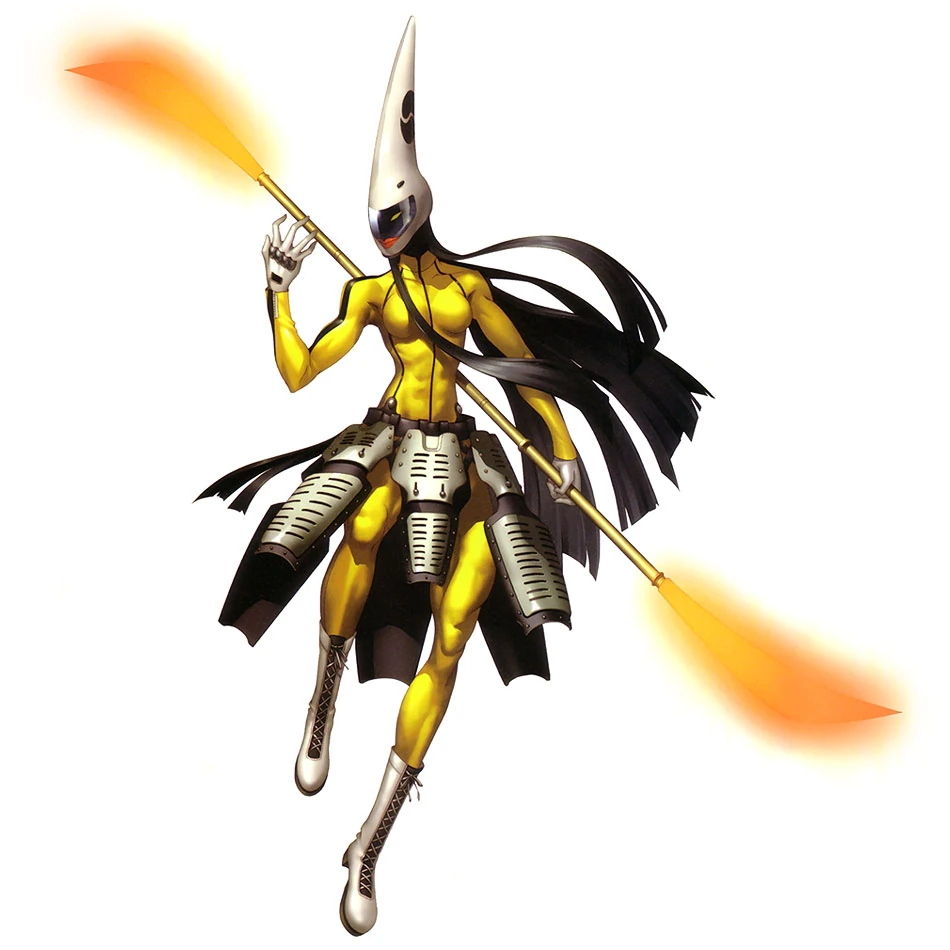
Shadow Chie has long, dark hair, with pale skin and a lot of yellow on it, as well as the smiling face over the pointed, full-head cover it wears (like the pin Chie wears). She wears mostly a a BDSM outfit and carries a whip, held up by struggling girls in outfits who look like Yukiko. She holds chains attached to the Yukiko's, and will use her hair and whip against anyone she turns her gaze to, especially against Yosuke (who has a strong element against her Shadow). Afterwards, while the long black hair stays, the outfit becomes more like a female version of the Bruce Lee tracksuit, with armor and a double-edged spear she uses to attack her enemies.
The Chariot, which works on movement and belief in one's self, is exemplified in Tomoe as she is often the one who attacks with a strong physical attack, and has to level up before she gains her element attack. While not the leader, she is one of the strongest members of the team, especially against many of the earlier Shadows that you face off against.
ELEMENT
Element: Bufu (Ice)
Weakness: Agi (Fire)
Ice is often an element used to distinguish a variety of water elements in fiction. Ice is a transformation of water, created in extreme temperatures (as opposed to steam, created at the other extreme). Water is considered a powerful element in many cultures, and often it is in or near water that something is created or destroyed. Perhaps the most famous quote about water that works for Chie and that exemplifies her and her card is one by Bruce Lee:
[Don't get set in one form, adapt it and build your own, let it grow, be like water. Empty your mind, be formless, shapeless - like water. Now you put water in a cup, it becomes the cup; you put water in a bottle it becomes the bottle; you put water in a teapot, it becomes the teapot. Now water can flow or it can crash. Be water, my friend.] {Source: Wikiquote}
Chie has to build herself up and adapt to the situations she's in. The Chariot is about movement and continuing forward with confidence. To move and be 'like water', Chie has to change and adapt to her new role and to her new opinion about herself. Through this and with the Protagonist's help, she begins to see that she does have a feminine side and admirers in her own right. She becomes who she needs to be, and adapts to what she needs to be.
Ice, though frozen, can sometimes have water flowing underneath. Huge pieces of ice, such as glaciers, often are much larger underneath the surface and are used to show the difference between what people see versus who you really are. Ice can, if thick enough, be safe to cross and create new landscapes, but if weak in any point, it can become extremely dangerous. Not only that, but depending on how well you're able to deal with such a cold element, you can create beautiful things like ice sculptures, castles, or even huge icicles that capture the light amazingly. But because of the way it's formed - with such cold - ice is also a dangerous element as well, just as water can be.
Chie shows herself to be more than simply a girl who enjoys fighting movies and who practices what she sees on the shows. She proves to have feminine qualities, but also manages to show herself as more than just the tomboy she attempts to be, and shows all that she can be and how good she is.
Next Time: Yukiko's Castle - Finale
Friday, March 27, 2015
"So Much Information" - Yukiko's Castle Analysis Part 1
I have broken up Yukiko's Castle dungeon into parts due to it being the first 'long' dungeon encountered in the game. Unlike the Twisted Shopping District, with only one room and minimal monsters, Yukiko's Castle serves more as a place for the player to learn how to best utilize their abilities and partners, though they are stopped short on the first trip through due to the events that first happen for the castle.
After Yukiko's 'show' begins, Chie demands coming with the group, and introduces them to a place to buy weapons and armor, as well as the Shopping District. This gives the Protagonist access to places to buy food and items to recharge their points (SP and HP) as well as access to the Velvet Room, the mysterious place where Igor and Margaret reside and where they can register Personas or even fuse them into stronger or newer Personas.
Welcome to the Velvet Room
Identified in the first few parts as the location of Igor and Margaret, who tell fortunes and look at the tarot cards, the two doors to the Velvet Room (in the Shopping District and the entrance to the TV World) allow the Protagonist to enter and do one of two things - Register or Buy Persona from the Compendium held by Margaret, or ask Igor to Fuse Persona in his possession together to create stronger or different Persona. If the Protagonist has a S.Link in the given Persona's Tarot, they gain special powers, often leveling up and gaining more power as a result. This is why S.Links are so important and why they become so important as the game progresses, to where even having a small link will allow for more power or a stronger Persona. At this point in the game, Two and Three-Card spreads are allowed to create Fusion Personas, with Three-Card spreads often resulting in more-powerful creations, depending on the level of the Persona. Also note that the level of the Protagonist determines the level allowed for fusing and creating new Personas.
Yukiko's Castle - Entrance to Floor 2
The entrance and appearance to Yukiko's Castle is that of a traditional Western Castle, with the group walking up to where a large gate is open to the swirling doorway inside. Outside, rearing horses appear as statues lining the entrance. Horses rearing in such a way tend to mean fright, aggression, excitement, disobedience, or even in pain {Source: Wikipedia}. Stallions rearing are often signs of a fight (stallions are also considered 'studs'). Horses are also viewed as 'free spirits', so it's possible that the statues out front show some of Yukiko's concern over her inability to break 'free', and her wish to do so no matter what the cost (note that rearing can cause harm to the animal and the rider in some cases). The horses might also indicate Chie's Shadow Self having a hand in the creation - Chie is a 'free spirit' also reigned in, but she is more prone to 'rearing' and attacking others, especially to protect Yukiko.
Because of Yukiko's disappearance, Chie has joined and rushes into the castle, hoping to find Yukiko and save her despite the warning from both the Protagonist and Yosuke. Thus, the first objective while searching Yukiko's castle is to find Chie and save her from whatever is in the castle, as she does not have the glasses to see clearly, nor a Persona to fight off Shadows with. The lack of a Persona also means she's just as likely to run into her Shadow Self and be attacked.
The first floor is littered mostly with the Shadows from before, a few other ones as well, but overall the rush to ensure Chie's safety is what comes first. For whatever reason, Yukiko's Shadow Self does not appear in this first encounter outside of appearing on the TV to announce her goal of finding a Prince. It could be that Yukiko's Shadow wishes to test Chie, or that Chie's repressed self has scared off Yukiko's. It's only after Chie reappears with her Persona that Yukiko considers Chie one of her 'Princes'.
[I am a Shadow, the true self...]
Chie Satonaka: The Chariot Tomoe
Another classmate encountered in the first day, Chie Satonaka is a tomboy who enjoys fighting films and who often hangs out with Yukiko. Chie has lived in Inaba her whole life, though she doesn't always know all of the people there as well as Yukiko. The two have been friends for a very long time, and Chie shows a great deal of concern for Yukiko, especially when she starts working more and more at the Inn, as well as when she's kidnapped. Chie's fear for her is what drives her into the castle ahead of everyone, ignoring Yosuke and the Protagonist's calls for her to wait for them.
Chie is often upbeat and optimistic, and though she is a tomboy in general and will use incidents with the boys (Yosuke in particular) to get steak lunches out of him, or even demand discounts, she is still feminine in her own ways. She and Yosuke often play off each other as comic relief of the group, with Chie being more like a male version of him in some cases. She is often approached by boys who want to ask her about Yukiko, which has lead to a lot of her insecurities. It's on this, and Yukiko's seeming dependence of her, that her Shadow preys on, pointing out Chie's own insecurities and her need for Yukiko to need her. Chie does need friends - she very obviously enjoys her time with all the others, and accepts everyone pretty quickly when the group begins to grow. Though she is quick to attack, especially when her friends are in danger, or suggest violence against the perpetrator of the crimes, Chie also will sometimes pull back from attacking others she knows, or will defend them no matter what the circumstance. She, like Yosuke, is a huge asset to you during the game, and while others can fill her role as a very heavy fighter (especially later on), she still does her best to help out and works with the group to learn more about herself and to be happy with both her feminine and masculine side.
Chie's Shadow self appearing as Chie works to free Yukiko means that this is the second dungeon where the trials are meant for at least two people, though this time there is a chance you can save both instead of arriving too late for one. Despite this, the Shadow isn't going to pull any punches either - she's quick to point out Chie's need for Yukiko and her dislike of herself compared to Yukiko's own beauty and femininity quickly come out, and the presence of others only makes Chie more agitated by what the Shadow is saying, as well as more willing to not accept the Shadow as what is really inside of her and what she really feels about Yukiko. Like Yosuke's need for people to pay attention to him and stay with him, no matter what, Chie's need for friends that need her as well manifests in a dangerous way.
TAROT ANALYSIS
The Chariot (VII), Reversed
The Chariot in general means movement, a control over said movement, self-assertion, and going into victory or war. The card itself shows a man or person of high rank in a chariot or similar vehicle, holding the reigns of two animals or mythical figures, one black and one white. The ability to control those animals while drawing a chariot is a very dangerous thing, and the results means years of experience and dedication, as well as being able to have animals that are just as well-trained and controlled. In some cases, the Chariot can also represent other modes of travel, like a car or similar.
Thus, the Chariot reversed is someone who has lost control, who has low self-esteem, and who lashes out or abuses those around them. If we continue with the car reference, the Chariot upright is a car that has someone who knows what they're doing, who is able to do whatever they need the car to do. The Chariot Reversed is an upside-down car, one that's crashed, and all the issues that comes with it. In the Fool's Journey, the Chariot is the Fool, having grown up and managed to gain control and an assertiveness over his powers and his abilities, gaining control of his environment.
Chie has to gain control of herself, of her darker self and of her unwanted emotions, in order to move forward and change, to regain that assertiveness and to have it be genuine instead of fake.
THEME: Friendships and Loyalty
Chie's push to find Yukiko is due to how close they are as friends, as well as how much Yukiko means to Chie and vice-versa. Even if it was Chie in the Shadow World instead of Yukiko, I don't doubt that Yukiko would go through everything to save her as well and make sure she was alright. Their loyalty to each other is a major theme in the Castle dungeon - from Chie's attempts to save Yukiko that ends in her facing her own Shadow, to Chie helping Yukiko after they face off against Yukiko's Shadow. Chie even being called one of Yukiko's 'Princes' shows Yukiko's belief that Chie could act in the role the Prince was assigned, taking her away from Inaba and her ties to the Amagi Inn. While Yosuke and the Protagonist hold some connection due to the S.Link they created, as well as their shared 'newness' to the Inaba area, Chie and Yukiko have known each other for far longer, and know each other well enough to understand the dangers that come with such a close friendship. As Shadow Chie showed, sometimes even close friendship and such deep loyalty can be toxic, However, it also gives Chie something to work on as she realizes that she cannot always act as she had, and that she must find herself, as well as be a better friend to Yukiko, if she is to move forward. By doing this, and by admitting to the guys as well that this is something that is within her, Chie not only gains more friends outside of Yukiko, but shows her ability to grow and become a better person.
Next time: More on the Persona - Tomoe
Tuesday, March 24, 2015
"A Maze of Relationships" - Social Links and Changing Midnight Channel
After facing Yosuke's Shadow and gaining a Social Link, the two are determined to figure out the reason for the murders and what is going on. This creates a new scene as the Protagonist agrees to aid in figuring out the murders.
CLOSER TO THE TRUTH
Before the next big boss is faced, the Protagonist forms his first Social Link, a bond between people that allows him to slowly get them to open up and, if they are part of the team, to give them a special ability as more of the bond is unlocked. The more information the Protagonist has about the person, the closer they are and the stronger the bond.
This is important for the Protagonist and his power, as well as for the game in general. Each bond is treated to the "Thou art I" part, but added with it is not only the name of the card, but also that the bond will bring you 'closer to the truth'.
In some cases, such as with bonds between those who create Personas like Yosuke, the 'truth' is two things - their truth (i.e. why they have such a powerful suppressed self and what their 'true' self is) as well as the truth of the murders and who is throwing people into the TV World. Other bonds allow for one to learn more of the 'truth' behind a specific person, normally allowing for more of the Protagonist's abilities to be trained, but also allowing for some time away from the murder and instead to invest in the community and to help whoever the Protagonist is able to help. Social Links (S.Links) are often created either by saving the person and them later joining the group to solve the crime, or by meeting them or talking with them in everyday life. Some S.Links require a high enough Social Qualities to start or move forward.
Social Qualities
There are five main Social Qualities that you can advance in order to help with tests, get a part-time job, or even to start or advance certain S.Links. Each of the five are tied with choices you make or what you do in your spare time. In the first play through of the game, they all start at the bare basics, but the second play through should allow you to bring over all the qualities that you once had (as this is my first playthrough, I started with the basics...this is a long game and I have put it aside for other games before, sadly).
The Five Qualities are:
- Understanding -
This will allow you to show your awareness of others around you. It allows you to empathize towards others and their pain. Higher Understanding allows for more solidarity with others.
- Knowledge -
This comes mostly from classes and studying, so this particular set applies mostly to book-knowledge and the ability to understand said knowledge. Higher Knowledge means you will get rewarded for test scores.
- Courage -
Courage comes from being able to either be upfront with someone about something, call someone out, or otherwise show your ability to stand your ground, no matter what. In the game, you can often gain Courage by eating some of the food you find in the fridge that is...questionable. (In many cases very questionable)
- Expression -
Like Understanding, Expression has to do with empathy, but this focuses more on being able to show your empathy over empathizing with them. Higher Expression allows you to speak with people who might otherwise be closed off.
- Diligence -
Diligence deals mostly with being able to keep dates or follow through with something that you might not always want to do. Higher Diligence allows you to do certain things more often.
The Continued Mystery
Not long after going into the world and encountering Shadows and Personas for the first time, someone new appears on the Midnight Channel. Chie is very sure that person is Yukiko Amagi, who had appeared that night in an interview about the whereabouts of Yamano before her death. However, despite appearing on the TV, Yukiko is fine and simply had to work at the family-run Amagi Inn. That night, the Midnight Channel comes in clear, but it's not quite Yukiko who we see on the TV...
Revised Analysis 1: The Midnight Channel
During the last few days, Yukiko appeared on the television in some way three times - the main broadcast in which she is asked rather inappropriate questions by an interviewer about being so young and pretty in her kimono (he was there to interview her about Yamano's time there and instead went into talking about Yukiko's look and her youth), with her back turned and wearing the kimono but appearing to look 'out' at something in the Midnight Channel, and finally, in her 'princess' dress, in what Yosuke describes as like 'bad television', entering a castle to find herself a Prince (or 'score a hot stud', depending on the translation) in the new Midnight Channel.
In the beginning of the story, the Protagonist passes by a television playing the news about Yamano's affair and her being let go of at the station. When we see her being attacked, there's a hint of it being like turning to a tv that isn't quite in focus, with static sounding and the picture grainy, enough to see that it's possibly Yamano, but not enough to see any other details. When seeing Saki Konishi on the TV, the picture is far more grainy and out of focus, but it shows her enough to know she's in pain. The Protagonist learns from Yosuke, the day Saki's body is found, that she appeared again on the Midnight Channel, appearing to be in agony.
This seems to be an escalation of what is going on, or it could simply be the Midnight Channel warping, now that there is a chance of 'saving' those within it. Yukiko's disappearance after appearing on the Channel may hint at the first part being a 'teaser' for who is to come, with the next part being the 'show' itself. With Yamano and Saki Konishi, we didn't see any 'shows', but rather them being hurt or put into the TV, and we see the results of the 'dungeon' they were put in later on. With Yukiko, you get an idea of what her repressed self is feeling, and there seems to be a hint that this a deeper and possibly darker 'repressed' self than the others, or that her placement within the TV has allowed for the Shadows to more easily move around her than with the others. The time between a dense fog and Yukiko disappearing into the TV World seems to indicate that the Shadows are not as angry or easily riled up, as they were with Saki and Yamano's appearance in the TV. It would also explain the changed format, allowing for a look into the psyche and what the group will be facing over no hints at all of what happens and instead only showing them being attacked.
If this is the case, then the ones on TV who are focused on by the media have a high chance of being next on the Midnight Channel. As Chie mentions before Saki Konishi's death, the reason for her being on the Channel might be that the media was showing her interview so often, so people had 'Saki on the brain'. That seems to result in showing who appears next as the 'preview', and then the one who appears on the Midnight Channel 'program' that their Shadow uses to hint at the issues set deep within the person's mind, and which created them in the first place.
Next up: Analysis of Yukiko's Castle Part 1
If this is the case, then the ones on TV who are focused on by the media have a high chance of being next on the Midnight Channel. As Chie mentions before Saki Konishi's death, the reason for her being on the Channel might be that the media was showing her interview so often, so people had 'Saki on the brain'. That seems to result in showing who appears next as the 'preview', and then the one who appears on the Midnight Channel 'program' that their Shadow uses to hint at the issues set deep within the person's mind, and which created them in the first place.
Next up: Analysis of Yukiko's Castle Part 1
Subscribe to:
Posts (Atom)